
Automatic Screen Printers for Sale
Purchase Used Automatic Screen Printers from Leading Manufacturers
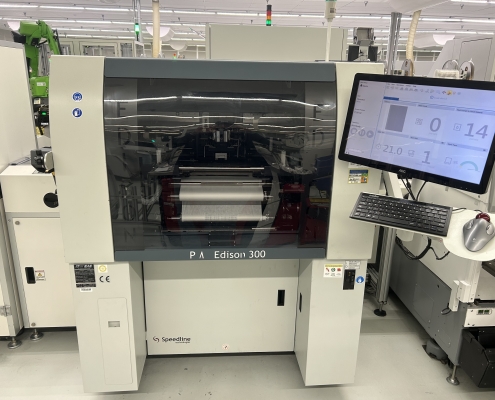
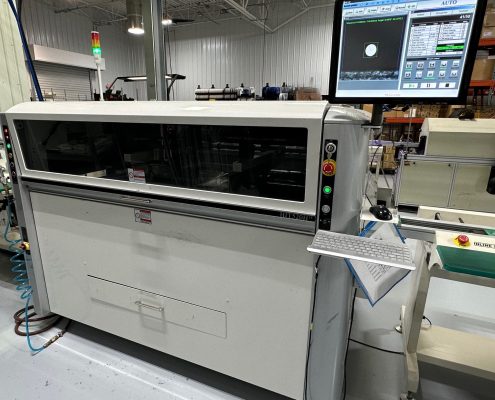


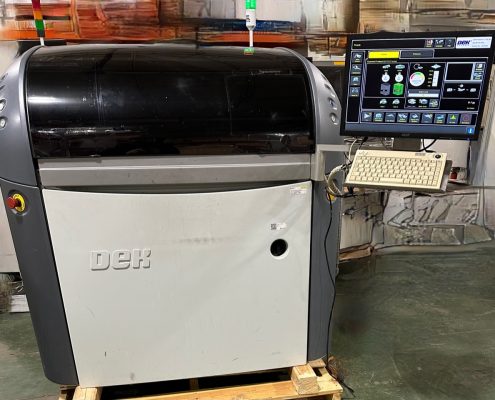


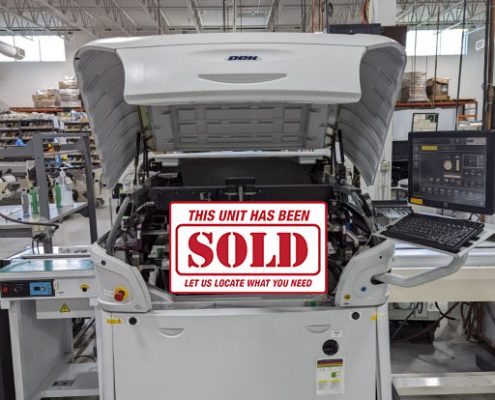
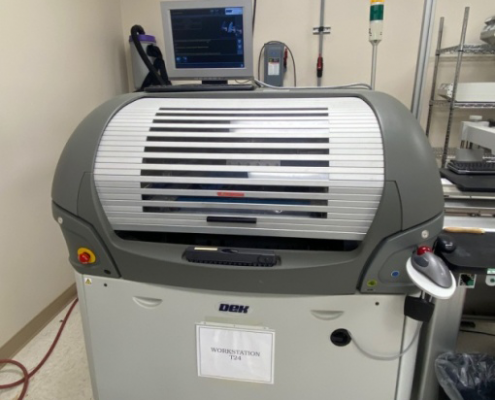

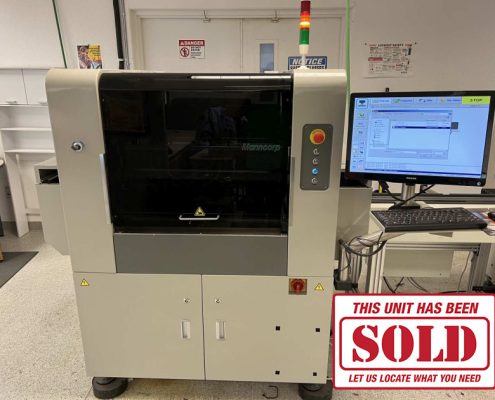

SMT Sales Group specializes in the procurement and sale of high quality, used and pre-owned Stencil Printers from top manufacturers such as Speedline, Momentum, DEK, MannCorp and more. We also offer service contacts for the printers that we sell or any printer that you may have.
Automatic Stencil Printers in SMT and PCBA Manufacturing
Automatic stencil printers are a critical component in the surface-mount technology (SMT) and printed circuit board assembly (PCBA) manufacturing processes. These machines apply solder paste to PCB pads with high precision before electronic components are placed and soldered. By automating the stencil printing process, manufacturers achieve greater accuracy, repeatability, and efficiency, reducing defects and improving overall production quality.
How Automatic Stencil Printers Work
The stencil printing process begins with the PCB being securely positioned in the printer using a vacuum or mechanical clamping system. A metal stencil, typically made from stainless steel or nickel, is then aligned over the PCB. This stencil contains precisely cut apertures corresponding to the solder pad locations on the board.
A squeegee mechanism spreads solder paste evenly across the stencil’s surface, forcing it through the apertures onto the PCB below. After the squeegee passes, the stencil lifts away, leaving precise solder deposits on the board. The PCB then moves to the next stage of production, where components are placed onto the solder paste and reflow soldered in an oven.
Key Features of Automatic Stencil Printers
Modern automatic stencil printers incorporate advanced features to optimize performance:
-
High Precision Alignment – Vision-based alignment systems use fiducial marks on the PCB to ensure the stencil is perfectly positioned, minimizing misalignment errors.
-
Automated Squeegee Control – Adjustable speed, pressure, and angle settings help maintain consistent solder paste application.
-
Solder Paste Inspection (SPI) Integration – Some models include built-in inspection systems to verify paste deposition accuracy and detect insufficient or excessive paste application.
-
Self-Cleaning Mechanisms – Automated cleaning functions remove residual solder paste from the stencil after each cycle, preventing defects caused by clogged apertures.
-
Fast Changeover Capabilities – Quick stencil change and automatic adjustment features enable efficient transitions between different PCB designs, reducing downtime in high-mix manufacturing environments.
Benefits of Automatic Stencil Printing
-
Improved Consistency – Automated application reduces human error and ensures uniform paste deposition.
-
Higher Throughput – Faster cycle times increase production efficiency, especially for large-volume manufacturing.
-
Reduced Defects – Precise control minimizes defects such as insufficient solder, bridging, or misalignment.
-
Lower Operational Costs – Automation reduces labor requirements and material waste.
Conclusion
Automatic stencil printers are essential in SMT and PCBA manufacturing, providing high-speed, repeatable, and accurate solder paste application. Their integration with modern production lines helps ensure reliable electronic assembly with minimal defects, making them a cornerstone of efficient PCB manufacturing.